 Chaire UNESCO Alimentations du monde
In 1971, Diet for a Small Planet broke new ground, revealing how our everyday acts are a form of power to create health for ourselves and our planet. This extraordinary book first exposed the needless waste built into a meat-centered diet. Now, in a special edition for its 50th anniversary, world-renowned food expert Frances Moore Lappé goes even deeper, showing us how plant-centered eating can help restore our damaged ecology, address the climate crisis, and move us toward real democracy. Sharing her personal journey and how this revolutionary book shaped her own life, Lappé offers a fascinating philosophy on changing yourself—and the world—that can start with changing the way we eat.
Accueil > Mots-clés > Source > Ressources hors Chaire
Ressources hors Chaire
Articles
-
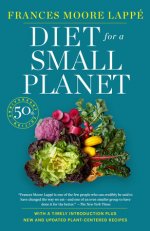 Diet for a small planet
3 novembre 2021, par Mathilde COUDRAY -
 Gouverner la qualité alimentaire par les applications
3 novembre 2021, par Mathilde COUDRAYL’actualité du marché des produits de grande consommation est marquée par l’apparition d’applications mobiles permettant aux consommateurs d’évaluer les produits alimentaires en scannant leurs codes-barres. Cet article analyse les critères de qualification et de notation des produits mobilisés par ces applications et les projets controversés de gouvernement des conduites qui les sous-tendent. Il montre que les applications évaluent les produits à partir de conceptions plurielles du « bien manger », qu’elles s’articulent autour de quelques dimensions prépondérantes (la qualité nutritionnelle, les additifs et le niveau de transformation des produits) et qu’elles participent tout à la fois à prolonger et à détourner l’action des pouvoirs publics en matière de gouvernement des conduites alimentaires et d’information du consommateur.
-
 Land statistics. Global, regional and country trends 1990–2018
26 octobre 2021, par Mathilde COUDRAYThe FAOSTAT Land Use statistics and associated land indicators provide information on the full land use matrix by country, including agricultural land (1961–2018) and forest land (1990–2018). These statistics are based on data collected annually from countries via a standard Land Use, Irrigation and Agricultural Practices questionnaire. Forest land statistics in the dataset are collected separately from countries through the FAO Global Forest Resources Assessment (FRA, 2020). The FAOSTAT Land Cover statistics are conversely produced by FAO, based on its Land Cover Classification System (FAO-LCCS) (De Gregorio, 2015). Information is derived from remote sensing products generated independently by specialized Agencies, currently NASA (MODIS land cover) and the European Copernicus Climate Change service (CCI land cover). Thei brief provides an overview of the main results and changes over time in land use statistics with a focus on agricultural land uses, and with details at global, regional and country level. Additional information is provided on important irrigation and agricultural practices also collected via the above-mentioned FAO questionnaire. It also presents some of the results from the land cover dataset also at global, regional and country level and compares them to land use statistics, thus giving for the first time a joint view of land statistics in FAOSTAT.
-
 Approche sociologique des néophobies alimentaires chez l’enfant
26 octobre 2021, par Mathilde COUDRAYÀ partir d’une interrogation sur les enfants autistes, leurs singularités alimentaires ainsi que les difficultés et les ajustements pour l’entourage nourricier autour des repas, les auteurs, sociologues, questionnent les évolutions du répertoire alimentaire et plus particulièrement la phase de la néophobie. Ce travail examine la simultanéité et la complémentarité des processus de socialisation et d’individuation dans les évolutions des pratiques alimentaires des enfants. S’interroger en articulant les approches psychologique et sociologique permet d’explorer les soubassements des normes. Et aussi de distinguer la perspective phylogénétique à tendance universalisante de la néophobie de l’enfant dans le cadre de l’ontogénèse.
-
 Hungry city. How food shapes our lives
26 octobre 2021, par Mathilde COUDRAYHow do you feed a city ? It’s a question that we rarely ask, but which lies at the core of civilisation. The feeding of cities arguably has a greater social and physical impact on us and our planet than anything else we do. Yet few of us living in modern cities are conscious of the process. Food arrives on our plates as if by magic, and we rarely stop to wonder how it might have got there.
-
 Café : la success story qui cache la crise. Etude sur la durabilité de la filière du café
26 octobre 2021, par Mathilde COUDRAYProduit emblématique du commerce équitable et matière première agricole la plus échangée au monde, le café fait vivre 25 millions de familles d’agriculteurs. Mais dans quelles conditions ? Prix bradés pour les producteurs, impacts négatifs du changement climatique sur les récoltes, manque de ressources pour investir… Les alertes des producteurs se sont multipliées ces dernières années.
Dans ce contexte Commerce Équitable France, Max Havelaar France et le collectif Repenser les Filières ont commandité au Basic une étude surla durabilité de la filière café. Elle met en lumière ses (dys)fonctionnements, les effets des alternatives existantes dont le commerce équitable et l’agriculture biologique, ainsi que les autres leviers à actionner pour garantir sa durabilité. (présentation du site Commerce Equitable France)
-
 Realizing justice in local food systems
3 novembre 2021, par Mathilde COUDRAYFor alternative agrifood social movements, food-system localization is both an ideal and a pathway to resolve environmental, social and economic issues in the food system. This article addresses the potential for equity within food-system localization in practical and conceptual terms. Historical processes have shaped regions and social relations with vast differences in wealth, power and privilege and this has implications for thinking about and enacting equity through food-system localization. If food-system localization efforts are to work toward equity, they must consider inherited material and discursive asymmetries within frameworks of economy, demography, geography and democracy.
-
 2020 Global Nutrition Report
26 octobre 2021, par Mathilde COUDRAYThe 2020 Global Nutrition Report looks beyond global and national patterns, revealing significant inequalities in nutrition outcomes within countries and populations. Based on the best-available data, in-depth analysis and expert opinion rooted in evidence, the report identifies critical actions to achieve nutrition equity. Everyone deserves access to healthy, affordable food and quality nutrition care.
-
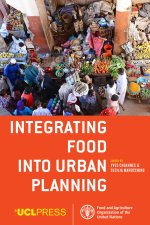 Integrating food into urban planning
23 novembre 2021, par Mathilde COUDRAYThe integration of food into urban planning is a crucial and emerging topic. Urban planners, alongside the local and regional authorities that have traditionally been less engaged in food-related issues, are now asked to take a central and active part in understanding how food is produced, processed, packaged, transported, marketed, consumed, disposed of and recycled in our cities.
-
 Guidelines on food fortification with micronutrients
3 novembre 2021, par Mathilde COUDRAYThe guidelines are written from nutrition and public health perspective, to provide practical guidance on how food fortification should be implemented, monitored and evaluated. They are primarily intended for nutrition-related public health programme managers, but should also be useful to all those working to control micronutrient malnutrition, including the food industry.